

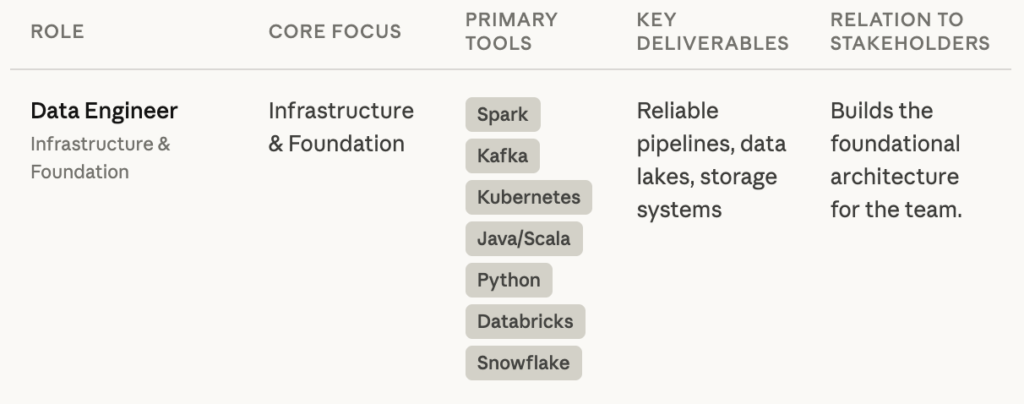
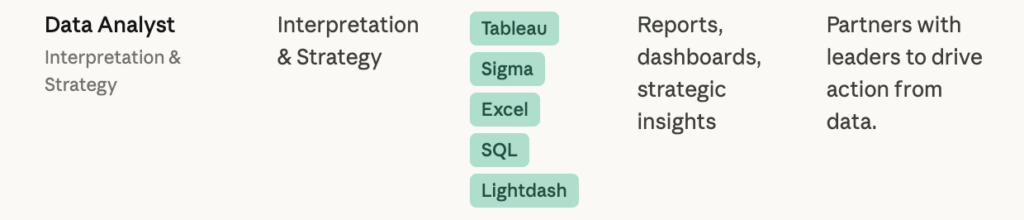
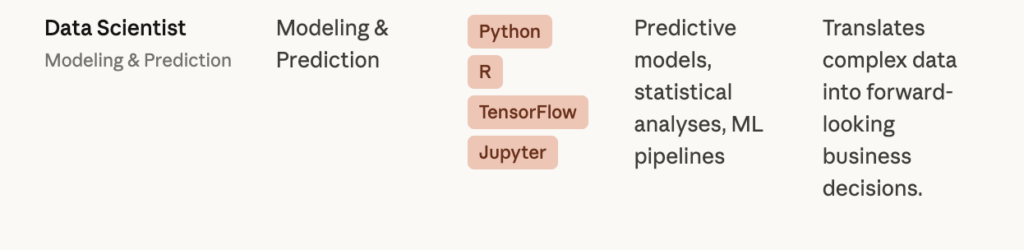
For years, most data teams were built around three core roles: Data Engineers, Data Analysts, and Data Scientists. Lately, we’ve been seeing another title show up more and more in hiring conversations: Analytics Engineer.
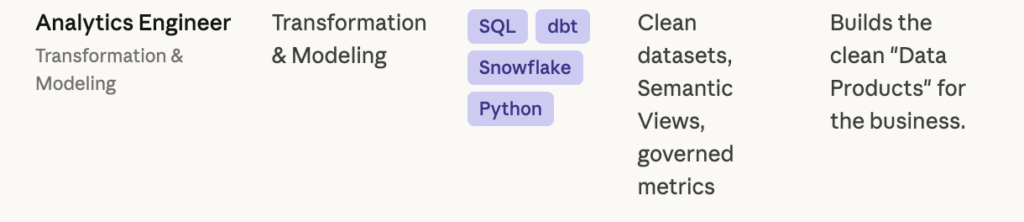
Analytics Engineers operate between data engineering and analytics, often taking on responsibilities from both sides. They transform and model data like a data engineer, while also building reports, dashboards, and defined metrics that analysts traditionally own.
A strong Analytics Engineer doesn’t just prepare data for someone else to interpret. They identify the data they need, structure it properly, and build the reporting layer that turns it into insight. That means the role often includes interpretation and strategic thinking, not just data preparation.
Because of this range of responsibilities, Analytics Engineers can significantly change how teams are structured. In smaller or growing teams, a skilled Analytics Engineer may take on work that once required both a data engineer and a data analyst. In larger organizations, they help both roles operate more efficiently by owning the transformation and analytics layer in between.
As organizations push deeper into data, AI, and self-serve analytics, the Analytics Engineer is becoming less of a nice-to-have and more of a load-bearing role. If your team doesn’t have one yet, it’s worth asking what’s filling that gap today and whether the answer is nobody.
The table below shows how each role compares across core focus, primary tools, key deliverables, and relationship to stakeholders.
Recent Client Success
Last month, we helped a healthcare organization grow its data team by placing two key roles: an Analytics Engineer and a Data Engineer. It’s another example of how companies are strengthening their data ecosystems and recognizing the impact Analytics Engineers can have in bridging data engineering and analytics.
If your team is expanding its data capabilities or thinking about adding roles like an Analytics Engineer, we’re always happy to compare notes on what we’re seeing in the market.
And if AI is on your radar but you’re not sure where to start, our AI & BI Readiness Assessment can help. This free tool gives you a quick snapshot of your organization’s readiness and highlights practical next steps for moving forward.